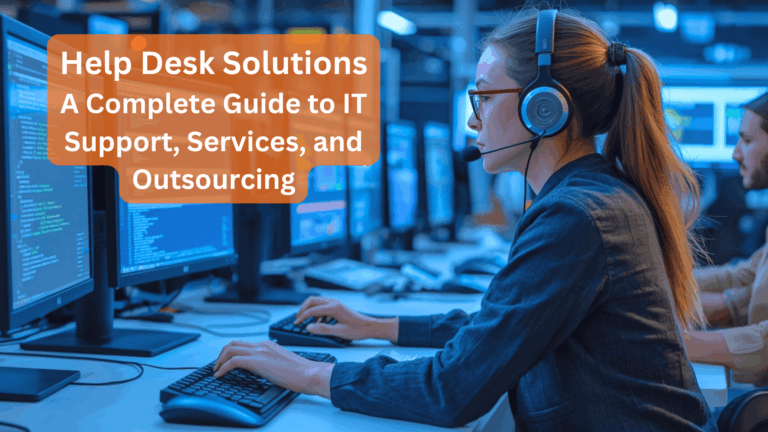
Help Desk Solutions: A Complete Guide to IT Support, Services, and Outsourcing

Help desk solutions play a critical role in modern business operations by ensuring fast, reliable IT support. From resolving technical issues to improving system performance, these solutions help organizations maintain productivity and minimize downtime.

Help Desk Solutions

In this guide, we’ll explore different types of help desk services, software tools, outsourcing options, and how to choose the right solution for your business.

What Are Help Desk Solutions and Why They Matter

Help desk solutions are technical solutions used for providing technical support to users. These solutions are important for effective business operations. These solutions are used for providing technical support to users. This enables organizations to have effective operations.

A Help Desk can perform various functions for organizations. These functions include providing technical support to users. This is important for effective operations within organizations. Thus, a help desk is important for organizations. This is due to the importance of technology in organizations. Every business uses technology for operations. Thus, organizations need effective solutions for providing technical support to users.

Who Needs Help Desk Solutions?

Help desk solutions are essential for a wide range of organizations that rely on technology for daily operations. Businesses of all sizes can benefit from structured IT support systems.

Small and medium businesses (SMBs)

SMBs often lack large in-house IT teams, making help desk solutions critical for managing technical issues efficiently.

Enterprises with complex IT systems

Large organizations require structured support to manage multiple systems, users, and networks without disruption.

Remote and hybrid teams

Distributed workforces depend on reliable remote support to resolve issues quickly and maintain productivity.

SaaS and tech companies

These businesses must ensure continuous uptime and seamless user experiences, making help desk systems a necessity.

Organizations with high customer interaction

Companies that handle frequent customer queries need efficient support systems to maintain satisfaction and service quality.

Types of Help Desk Services

There are various types of help desk services used for providing technical support to users. These services vary for different organizations. These services can be customized for effective operations within organizations.

Some types of help desk services include:

  • IT help desk services
  • Remote help desk services
  • 24/7 help desk services
  • Enterprise help desk services

Business organizations can opt for these services depending on their requirements. These services are important for effective operations within organizations.

Key Benefits of Help Desk Solutions

Implementing help desk solutions provides several advantages that directly impact business performance and operational efficiency.

1. Faster issue resolution

Structured ticketing systems ensure that problems are identified, prioritized, and resolved quickly.

2. Reduced downtime

Quick response times minimize disruptions and keep business operations running smoothly.

3. Improved employee productivity

Employees can focus on their core tasks instead of dealing with ongoing technical issues.

4. Better customer satisfaction

Efficient support systems lead to quicker responses and improved user experiences.

5. Centralized support system

All IT issues and requests are managed in one place, improving visibility and coordination.

IT Help Desk Services and Support

IT help desk services focus on resolving technical issues quickly. These services support employees, systems, and networks.

They include:

  • Troubleshooting hardware and software issues
  • Managing user accounts and access
  • Supporting applications and systems
  • Monitoring IT performance

Businesses can explore professional IT help desk services for reliable support. These services improve efficiency and reduce operational delays.

Firstly, issues are identified. Secondly, solutions are provided. Lastly, systems are monitored to prevent future problems.

Help Desk Software and Tools

Help desk software helps manage support requests and track issues. It improves communication between users and IT teams.

Common features include:

  • Ticketing systems
  • Automation tools
  • Reporting and analytics
  • Knowledge base for self-service

There are many options available, including IT help desk software and AI tools. However, choosing the right help desk software depends on business needs and scale.

Cloud-Based Help Desk Solutions

Cloud-based help desk systems are becoming more popular. They allow businesses to manage support services online.

Benefits include:

  • Easy access from anywhere
  • Lower setup costs
  • Scalability for growing businesses
  • Improved data security

Businesses can explore cybersecurity and cloud services to support cloud help desk systems.

Therefore, cloud help desk solutions are ideal for modern and remote work environments.

Contact Neptune9 today to streamline your IT support and boost efficiency.

Help Desk Outsourcing: A Smart Business Move

Help desk outsourcing allows businesses to delegate IT support to external providers. This reduces the need for in-house teams.

Outsourced help desk services offer:

  • Cost savings
  • Access to skilled professionals
  • Faster response times
  • 24/7 support options

Because managing IT internally can be expensive, many businesses choose to outsource IT help desk services. This improves efficiency and allows companies to focus on core operations.

Managed Help Desk Services and IT Providers

Managed help desk services are provided by experienced IT companies. These providers handle all support tasks and system monitoring.

Working with a managed IT services provider offers:

  • Continuous system monitoring
  • Proactive issue resolution
  • Improved security
  • Better resource management

Businesses can also rely on managed IT security services providers for secure operations.

Hence, managed services help businesses stay protected and efficient.

Help Desk vs Service Desk: What Is the Difference

Many people confuse the help desk and service desk. However, they serve slightly different purposes.

  • Help desk: Focuses on fixing immediate issues
  • Service desk: Manages broader IT services and processes

Therefore, a help desk is more reactive, while a service desk is more strategic. Both are important depending on business needs.

Key Roles in a Help Desk Team

A help desk team includes different roles that ensure smooth operations:

  1. Help desk technician: Handles basic support tasks
  2. Help desk analyst: Manages complex issues and analysis
  3. IT support specialist: Provides advanced technical support

Each role contributes to better service delivery and faster issue resolution.

Practical Tips for Choosing the Right Help Desk Solution

Businesses should consider several factors before choosing a help desk solution:

  • Identify business needs and support requirements
  • Choose between an in-house or outsourced help desk
  • Select reliable help desk software
  • Ensure 24/7 support if needed
  • Work with trusted IT service providers

Also, consider scalability and future growth when selecting a solution. This helps avoid frequent changes later.

Key Takeaway

Help desk solutions are essential for smooth business operations. They improve productivity, reduce downtime, and provide reliable IT support.

To sum up, businesses should focus on:

  • Choosing the right help desk services or outsourcing option
  • Using efficient help desk software and tools
  • Implementing cloud-based help desk systems
  • Working with managed IT and security service providers

By following these steps, businesses can improve efficiency and maintain strong IT performance. Help desk solutions are not just support systems. They are a key part of business success.

Get Reliable Help Desk Solutions with Neptune9

Efficient help desk solutions are key to maintaining smooth operations, reducing downtime, and improving overall business performance. With the right support system in place, your organization can stay productive and competitive.

Improve uptime and productivity with fast and reliable issue resolution

Access expert IT support tailored to your business needs

Scale your IT operations with flexible solutions designed for growth

Whether you need fully managed help desk services or want to enhance your existing IT support system, Neptune9 provides reliable and scalable solutions to support your business.

Contact Neptune9 today to streamline your IT support and boost efficiency.

FAQs

What are help desk solutions?

Help desk solutions are systems and services that provide technical support to users, helping businesses resolve IT issues, manage requests, and maintain smooth operations.

What do IT help desk services include?

IT help desk services include troubleshooting hardware and software issues, managing user access, monitoring systems, and providing ongoing technical support.

What is help desk outsourcing, and why is it beneficial?

Help desk outsourcing involves hiring third-party IT providers to manage support services. It reduces operational costs, improves response times, and gives access to skilled professionals.

What is the difference between a help desk and a service desk?

A help desk focuses on resolving immediate technical issues, while a service desk provides broader IT service management, including long-term planning and process improvement.

What are the benefits of cloud-based help desk solutions?

Cloud-based help desks offer remote access, scalability, lower setup costs, and improved collaboration, making them ideal for modern and remote teams.

How do I choose the best help desk software?

Choose help desk software based on your business size, required features (ticketing, automation, reporting), scalability, and integration with existing systems.

Are managed help desk services better than in-house support?

Managed help desk services can be more cost-effective and efficient, offering proactive monitoring, expert support, and better security compared to in-house teams.